


Dissolution Testing for Unique Form Factors and Formulations
Table of Contents
Why standard compendial methods break down for non-conventional dosage forms — and how a CDMO builds fit-for-purpose methods when they do.
Why Dissolution Testing Matters
Dissolution testing measures the rate at which a drug is released from a pharmaceutical product under carefully controlled conditions. It is tempting to assume the result maps directly to how a drug performs in the body, but that correlation cannot be assumed—it must be established deliberately through dedicated in vitro–in vivo correlation (IVIVC) work.
Where dissolution earns its keep is at both ends of a product’s life. During formulation development, it gives formulators a way to compare prototypes against a target release rate. Even without a confirmed in vivo correlation, the working assumption is that rank order holds: a prototype that releases too fast in vitro is likely too fast in vivo as well. That’s often enough to steer the next round of iteration.
Later in development, dissolution shifts into a quality control role: distinguishing an acceptable batch from one releasing drug too quickly or too slowly. The method needs to be sensitive to changes that matter and, just as importantly, not overreact to changes that do not. This dual role makes dissolution both a core piece of product quality assurance and a near-universal regulatory requirement.
Dissolution testing is most powerful when a true IVIVC has been established, since it can then serve as a genuine surrogate for in vivo performance. In some generic drug development programs, this allows sponsors to waive in vivo bioequivalence studies in favor of comparative in vitro release data against a reference product.
Quick Grounding: USP Apparatus I–VII
Two USP General Chapters define the compendial toolkit for release-rate testing: <711>, which covers Apparatus 1 through 4, and <724>, which covers Apparatus 5 through 7. Apparatus 1 and 2 were the original workhorses, developed for oral solid dosage forms; the additional apparatuses were introduced over time as other dosage forms created new testing needs.
Each apparatus is built around a specific dosage form, but none of them covers every product a formulator might encounter. Regulators prefer a compendial apparatus whenever one applies, but they also recognize that some samples call for a modified compendial method, or a non-compendial approach altogether.
Where Standard Methods Struggle
Dosage form alone does not determine whether a product will need a custom approach. Many non-standard dosage forms adapt easily to a compendial apparatus, and sponsors should default there whenever possible; regulators expect it. The reverse is also true: some conventional-looking dosage forms run into real limitations with compendial equipment. The more reliable predictors are a handful of underlying technical challenges:
- Geometry and physical configuration: Samples that are too large, too small, irregularly shaped, or that float or adhere within the vessel do not always sit well in a compendial apparatus. Nanomaterial-containing products, such as nanosuspensions, present a related but distinct problem: dissolution testing depends on separating dissolved drug from undissolved particles, and nanosized particles pass through most standard filters. Sampling both dissolved and undissolved drug introduces bias, so these products typically require dialysis membranes or comparable separation techniques instead.
- Very low release rates: When a product releases very small amounts of drug into the large media volumes a compendial apparatus requires, analytical methods can struggle to detect the analyte reliably. That often pushes development toward a non-compendial apparatus that can operate in a smaller volume.
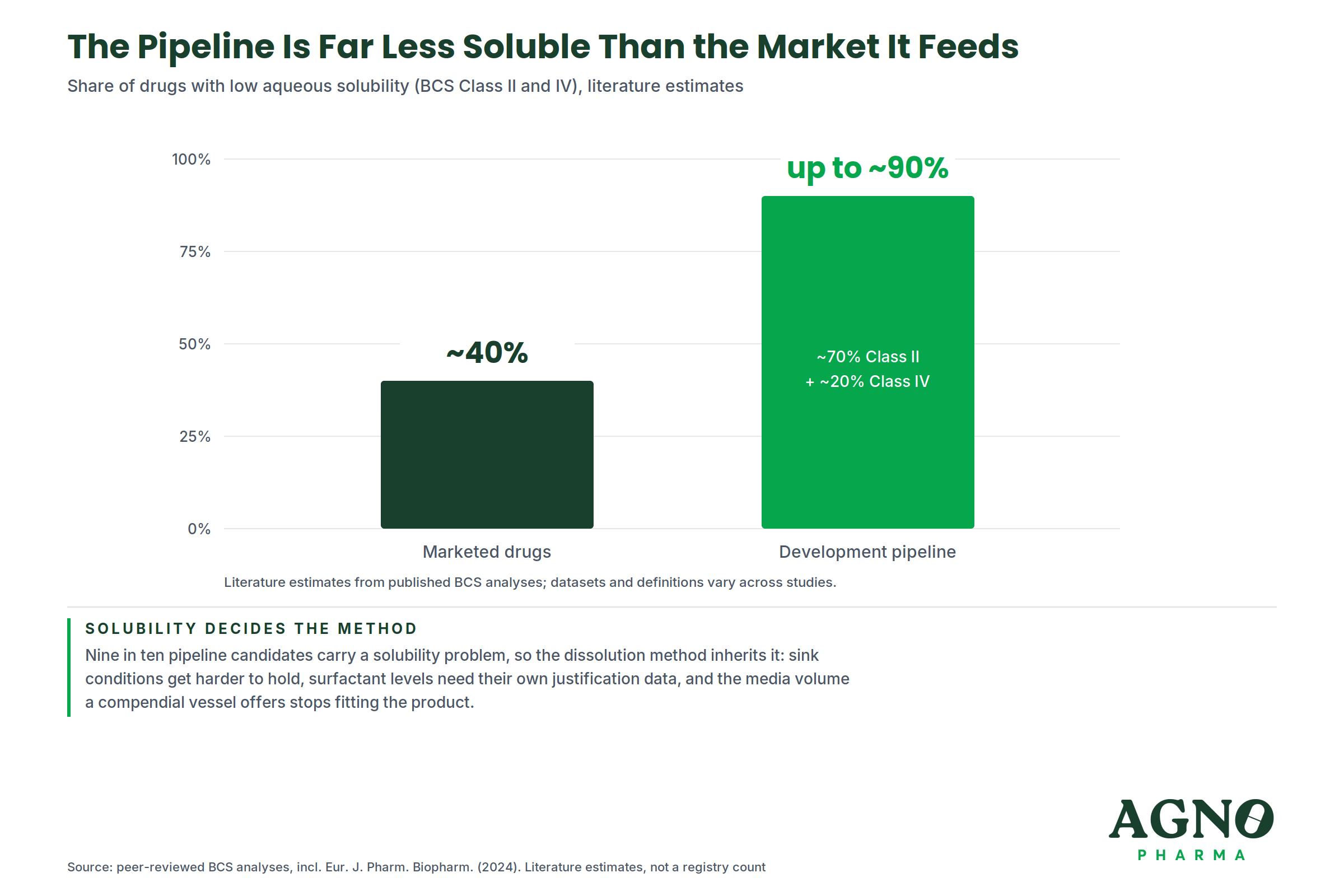
- Poorly soluble APIs: Here we have the opposite problem: maintaining sink conditions for a poorly soluble drug can require surfactants, or dissolution volumes larger than a compendial apparatus can accommodate.
- Non-sink conditions that are physiologically relevant: Sink conditions assume the receiving media has enough capacity to dissolve the drug without becoming a rate-limiting step. For some routes of administration — subcutaneous injections, for example — the actual in vivo fluid volume is much smaller than what’s available in a standard dissolution vessel, and true sink conditions may not reflect the physiological reality. In these relatively rare cases, testing under non-sink conditions can better mimic the in vivo
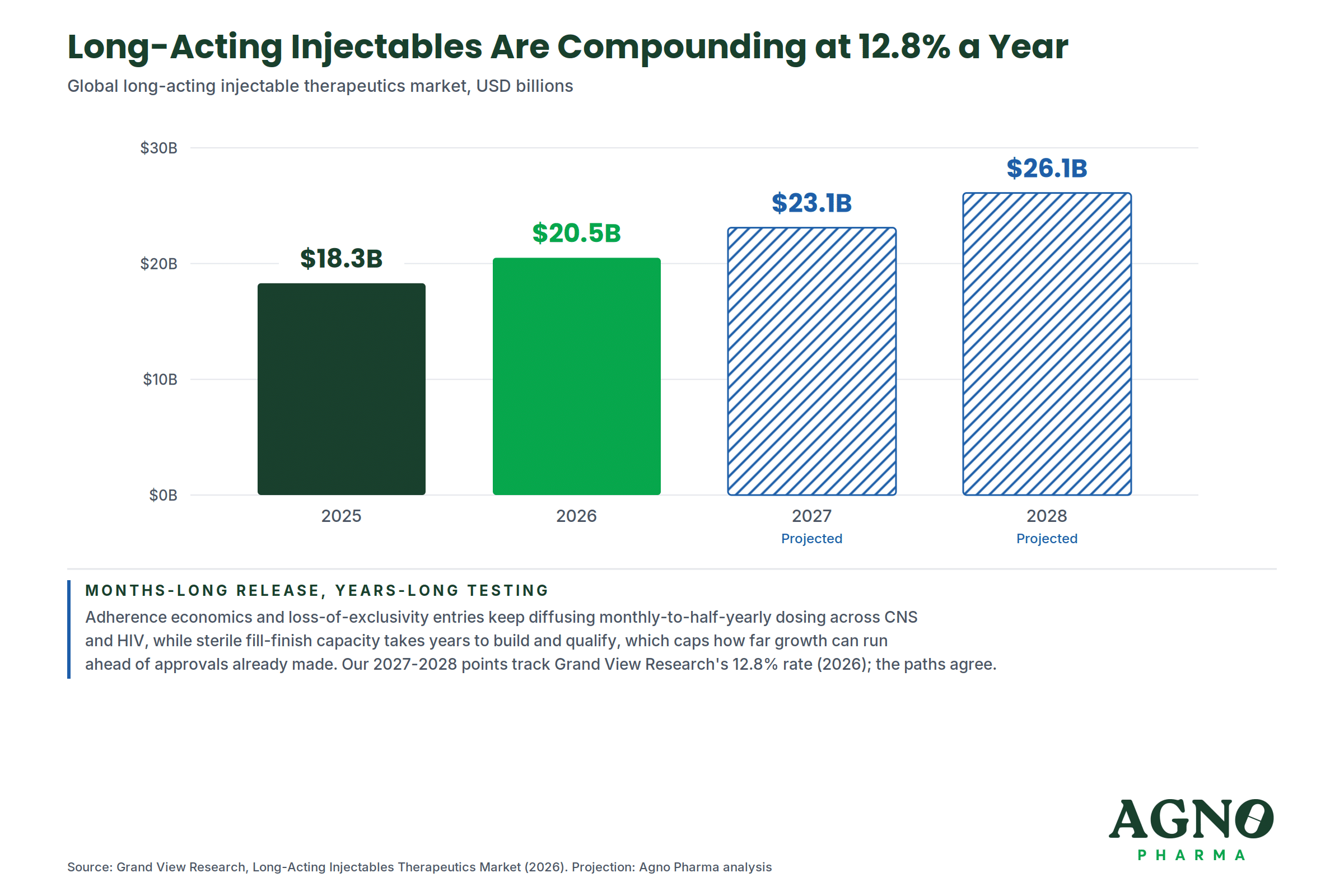
- Extremely long-acting products: Implants, vaginal rings, and similar products can release drug for months or years. Tying up a compendial apparatus for that long isn’t practical from a throughput standpoint, so these products are usually tested in non-compendial water baths or incubator shakers, which can accommodate far more samples at once.
- Extremely fast-releasing products: Orally disintegrating tablets, films, and strips are designed to dissolve almost immediately, which requires rapid, closely spaced sampling – often via in-line fiber-optic or UV-Vis systems – to accurately characterize the earliest part of the release curve.
Method Development: Getting the Conditions Right
Method development starts with characterizing the drug itself. The first step is establishing the API’s saturation solubility across a range of physiologically relevant media, from roughly pH 1–2 (approximating the stomach) to pH 7 (closer to plasma, vitreous fluid, or tears), since solubility can shift meaningfully across that range.
Poorly water-soluble APIs, which are common, often need surfactants to reach workable solubility without requiring impractically large media volumes. Regulators accept this approach but expect sponsors to justify the minimum surfactant level needed based on their own method-development data. That typically means screening several surfactant levels and multiple surfactant types — anionic, cationic, and nonionic — since different APIs solubilize differently depending on surfactant charge.
Once solubility data points to a workable media and volume, that selection, along with any precedent for the specific dosage form, usually determines which apparatus is in play. From there, method development moves to scoping the agitation rate. For USP Apparatus 2, for example, that means testing paddle speed at a few different set points to find one that is neither so fast that it fails to discriminate between meaningfully different products, nor so slow that the method becomes impractically long or oversensitive to formulation changes that do not actually matter.
Building a Method That Is Actually Discriminating
A dissolution method is only useful if it can distinguish between changes that matter and changes that do not. Getting there is a cross-functional exercise: the analytical team and the formulation team need to work together to identify which formulation or process attributes are likely to influence release rate, which requires understanding both the excipients’ function and the dosage form’s release mechanics.
Once the team has a hypothesis about which attributes are critical, the formulation group generates versions of the product with intentional variations in those parameters, and the proposed method is run against them. For a vaginal ring, for example, where release rate is governed largely by the thickness of the sheath around the ring, that might mean testing versions with a thinner and a thicker sheath than intended. If the method shows a difference, that is a good sign; if it does not, the method is not sensitive enough and needs more work.
IVIVC and Biorelevance
As noted above, an in vitro–in vivo correlation cannot be assumed early in development — it has to be built from actual in vivo data alongside the in vitro results. The typical approach compares a slow-releasing batch, a target batch, and a fast-releasing batch in vivo, then tests those same batches with the proposed dissolution method. At minimum, the goal is for the in vitro results to preserve the same rank order as the in vivo data. In stronger cases, a closer, more predictive correlation can be established, though that level of correlation is usually not achievable until later in development.
Once validated, an IVIVC becomes a genuinely powerful tool. It can support post-approval manufacturing changes using an in vitro study instead of a new human in vivo study, and in some cases, it can support a waiver of in vivo bioequivalence studies for generic product development, sparing sponsors the cost and time of human trials.
Regulatory and Validation Considerations
Dissolution testing is a near-universal regulatory expectation as a quality control test, and regulators accept in vitro release data as a surrogate for in vivo performance under the right conditions. As with any analytical procedure, dissolution methods also need to be formally validated as a program moves toward GMP and clinical trial material manufacturing.
Which Form Factors Most Often Need a Custom Approach
Form factor by itself is not the deciding factor. Plenty of non-standard dosage forms adapt cleanly to compendial apparatuses, and sponsors should default there when possible.
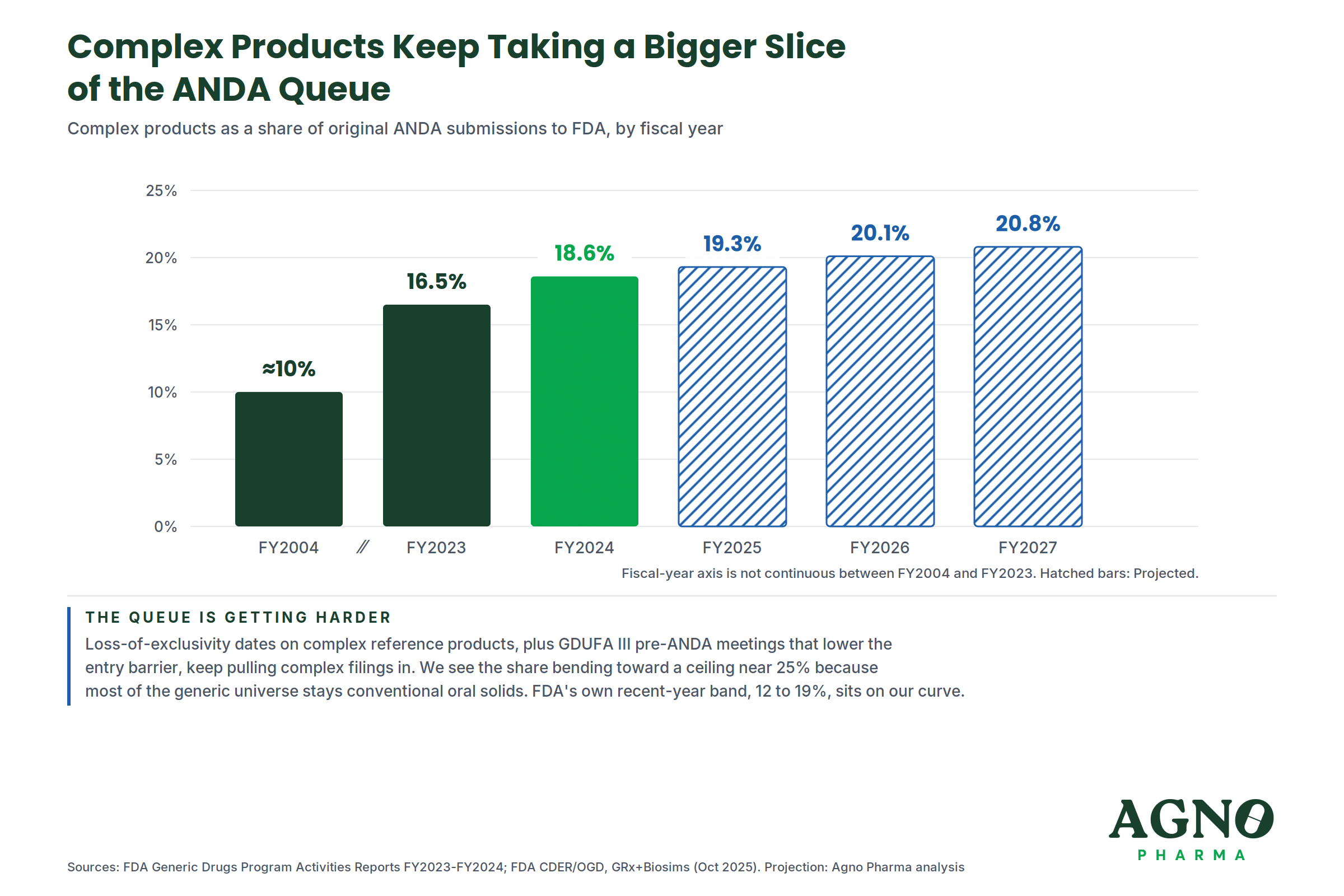
A few product types, however, tend to run into real limitations:
- Nanosuspensions and nanomaterial-containing products: As noted above, these typically require dialysis membranes to separate dissolved from undissolved drug, since standard filters cannot retain nanosized particles. Dialysis membranes bring their own method development challenges. They often bind API and slow diffusion, which can make the membrane itself the rate-limiting step. That makes membrane screening and selection critical.
- Intraocular implants. These are injected through a needle, so by design they are extremely small. Placed in the 500 mL-plus volumes typical of compendial apparatuses, they are difficult to keep in place, and the analytical sensitivity needed to detect such a small amount of drug in that large a volume becomes a real challenge. These products are usually tested in non-compendial shaker setups using much smaller release volumes.
- Long-acting implants. As covered above, the throughput limitations of tying up a compendial apparatus for months or years push these products toward non-compendial incubator shaker setups.
Modifying an Apparatus vs. Developing Something Novel
This is not a decision made at the outset of method development, but it follows from the data. The default is to work toward a compendial solution: establish saturation solubility, define the required dissolution volume, and check whether a compendial apparatus can accommodate that volume. Only after a compendial apparatus has been shown not to work because of the product’s size, geometry, physical behavior, or release mechanism, does the method move toward apparatus modification or a fully novel setup.
Where Sponsors Underestimate the Effort
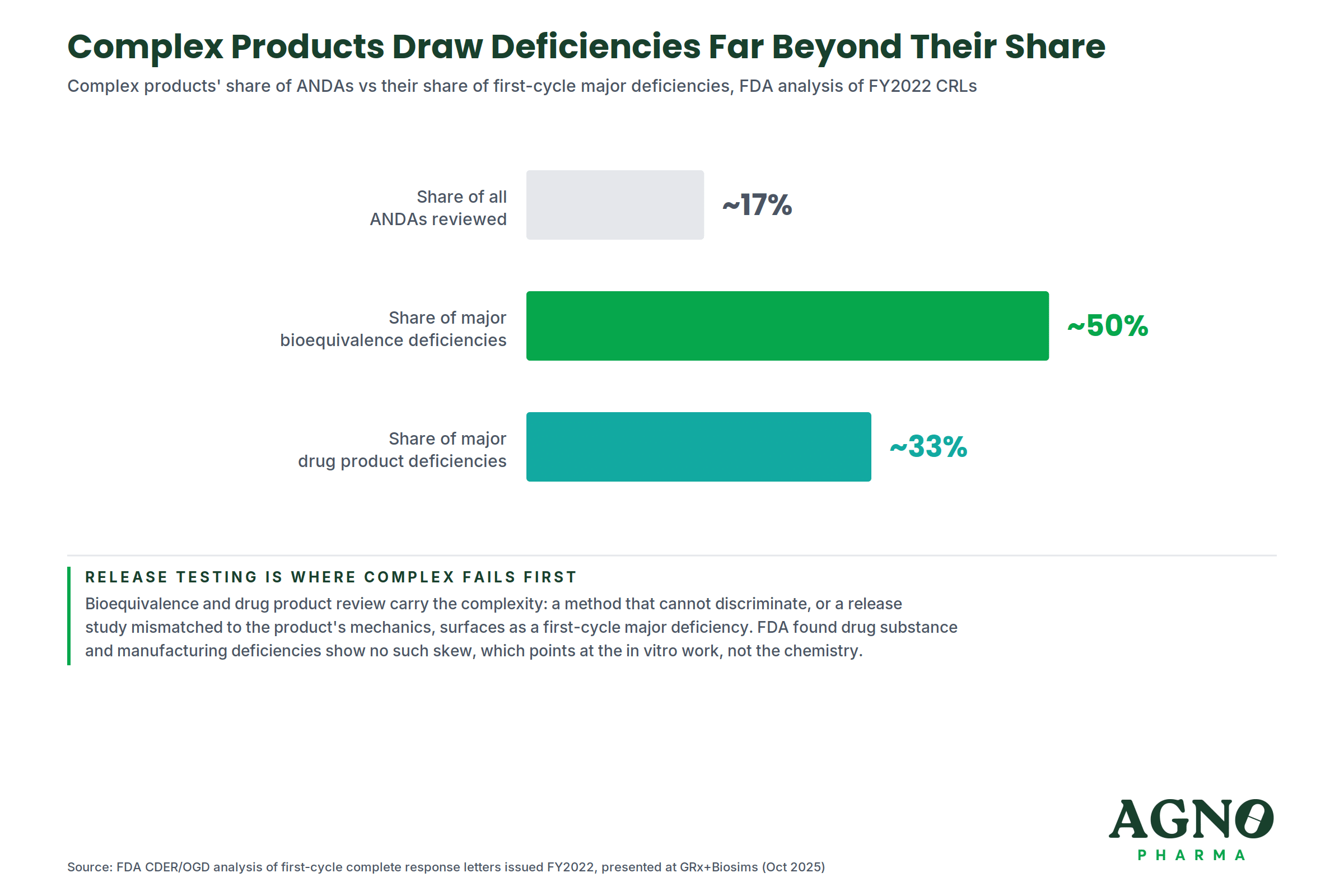
Two areas come up repeatedly where sponsors don’t fully grasp what this part of drug development requires. The first is the sheer amount of work it takes to demonstrate that a method is discriminating without being oversensitive, distinguishing formulation changes that actually matter to in vivo performance from minor variations that do not. This is where deep experience with a wide range of novel dosage forms pays off. It takes real familiarity with a dosage form’s release mechanics to propose the right critical quality attributes for a method to target.
The second is the effort required to sustain long-term extended-release studies, the kind that run for months or, in some cases, years. (Agno currently has a study roughly two years into a three-year timeline.) Sponsors sometimes picture this as a passive exercise where a CMDO drops the product in release media, samples it occasionally, and plots a curve. In practice, it demands active media exchange to preserve sink conditions and avoid microbial growth, frequent HPLC or other analytical testing governed by the stability of the analytical solutions themselves, and meticulous organization. A mistake in year two of a three-year study can compromise everything collected up to that point. Building a sampling plan that captures the release curve at the right time resolution without overwhelming the analyst is a skill developed over many studies like this.
This combination — deep release-mechanics expertise up front and the systems and discipline to sustain multi-year studies without losing data integrity — is what sponsors tend to underestimate, and where a CDMO with a track record in novel dosage forms earns its keep.
End-to-End CDMO Support Bringing Your Product to Market
The challenges of non-standard dosage forms do not stop once a dissolution method is in place. At Agno Pharmaceuticals, we know our clients’ products require that same meticulous attention to detail and high-level problem-solving at every stage, from early formulation work through validation and commercial manufacturing. Agno’s experience developing fit-for-purpose methods for novel and difficult products reflects a broader capability we have built as our foundation: partnering with sponsors from initial development through to market, so the expertise that solves a dissolution challenge today is the same expertise that carries the product to launch.
Collaboration, expertise, and a true partnership with our clients set Agno apart among CDMOs. Contact our team today to learn more about how we can support your drug development project every step of the way.
This article was written for Agno Pharmaceuticals with insights from Todd Wilson, Director, Analytical Services, Agno Pharmaceuticals.